New narrative framing strategies — proven to drive action for women’s power — simply by showing that women are powerful.
We have generations of momentum behind us. Women continue to gain real power. But in this particularly challenging moment, we need fresh energy to maintain that momentum — and avoid rage fatigue.
Power framing is grounded in the science of how narratives shape beliefs, and beliefs shape actions. It motivates us to take action by highlighting the fact that women have power, and that we can continue to gain more, even in the face of serious obstacles and disparities.

The evidence is clear that framing can change everything — our values, our beliefs, and even our culture. Power framing presents women’s power as natural and valuable. It helps people see that progress is possible and recognize that they can be part of advancing positive change. It moves them to act based on their own sense of power, not just their feelings of outrage.
Join us in discovering new research in the science of narrative framing, and learn how to use it to spark and sustain action for women’s power.

Bring your team to an upcoming Power Framing Webinar:
Fall sessions coming soon.Stay tuned!
THANK YOU to our past co-hosts!
Equitable Data Solutions
Gender Fair
National Black Women’s Justice Institute
PerryUndem
Running Start
She Should Run
TheLi.st
Women Business Collaborative
Women Creating Change

About the Power Frame Project
Women have steadily increased their share of power. Yet the received wisdom in narrative strategy is still to focus almost exclusively on the obstacles and disparities they face, in essence downplaying women’s achievements.
Cognitive and social science research shows that leading our narratives with women’s achievements and effective exercise of power, rather than obstacles and disparities, inspires the belief that we can and should continue to make progress. This feeling of efficacy – that we can and do reach our goals – is just as motivating as the anger and outrage we feel when we focus on the inequities and injustices women face. Importantly, a focus on power and efficacy also helps to avoid the risk of demoralization and burnout — something that many people feel today.
Power framing — leading with women’s achievements and effective exercise of power — also begins to dismantle negative stereotypes and implicit biases, helping people to see women’s power as natural and valuable. At scale, power framing can change culture as a whole.
The Power Frame Project is a project of rights advocate Dorothy Thomas’s We Tell Our Selves, in collaboration with Perception Institute, Design for Progress, Social Perception Action and Motivation Lab at NYU, and Gender Equity Policy Institute. Our goal is to share new narrative strategies that make messaging about women and power more effective and more sustainable.




To help you craft the most motivating narratives for women’s power.
More About the Research
Power Frame Project research was led by New York University’s Social Perception Action and Motivation Lab, directed by Dr. Emily Balcetis, in collaboration with Perception Institute, Design for Progress, and Gender Equity Policy Institute, and overseen by We Tell Our Selves.
Across three large-scale studies of U.S. citizens and permanent residents (total N > 14,000), we examined how media frames about women's underrepresentation in leadership shape attitudes and behaviors relevant to collective action, and the emotional pathways through which they do so.
Participants read news-style articles that either emphasized women's accomplishments and progress, or highlighted systemic barriers and discrimination, across political and business domains.
Power frames consistently increased feelings of empowerment. Frames that made obstacles salient increased anger. These emotions, in turn, motivated support for gender equity through distinct psychological pathways. Empowerment predicted broader prosocial engagement — including more positive attitudes toward women in leadership, stronger intentions to promote equity, and greater behavioral engagement, including written advocacy to officials on behalf of a stalled congressional bill supporting women's empowerment. Anger at social injustice also mobilized support for women, but primarily through oppositional shifts — reducing positivity toward advantaged groups rather than building it toward women.
A preregistered final study further demonstrated that empowerment and anger differentially shaped beliefs about leadership, system justification, attributional reasoning, implicit and explicit gender-leader associations, and willingness to engage in equity-promoting behaviors.
Together, these findings demonstrate that media narratives can strategically mobilize collective action by shaping emotional responses to inequality — and suggest that empowerment-based framing may drive social change while minimizing some of the divisive interpersonal consequences associated with anger-based approaches.
Relevant reports
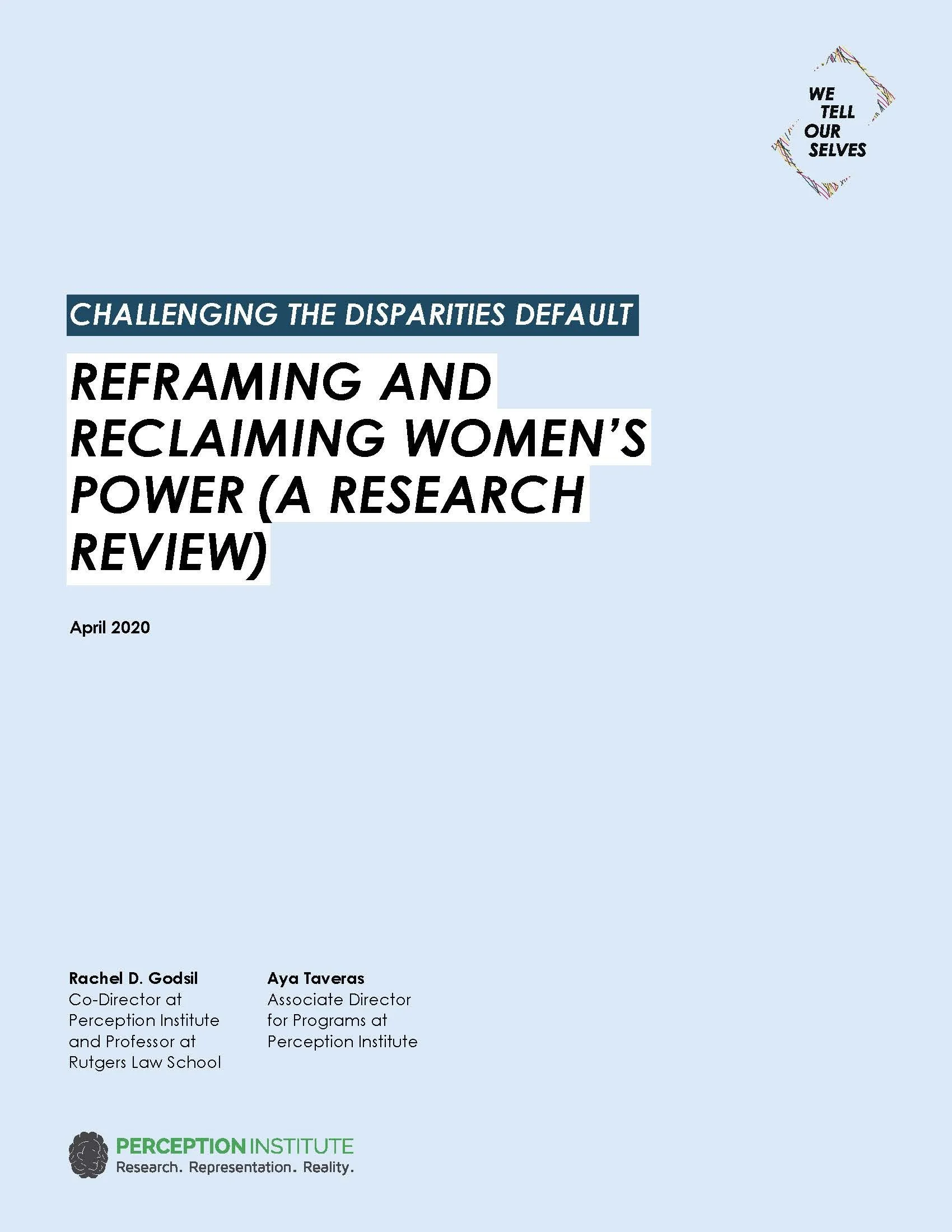
A paper establishing the theoretical underpinnings of the hypothesis.
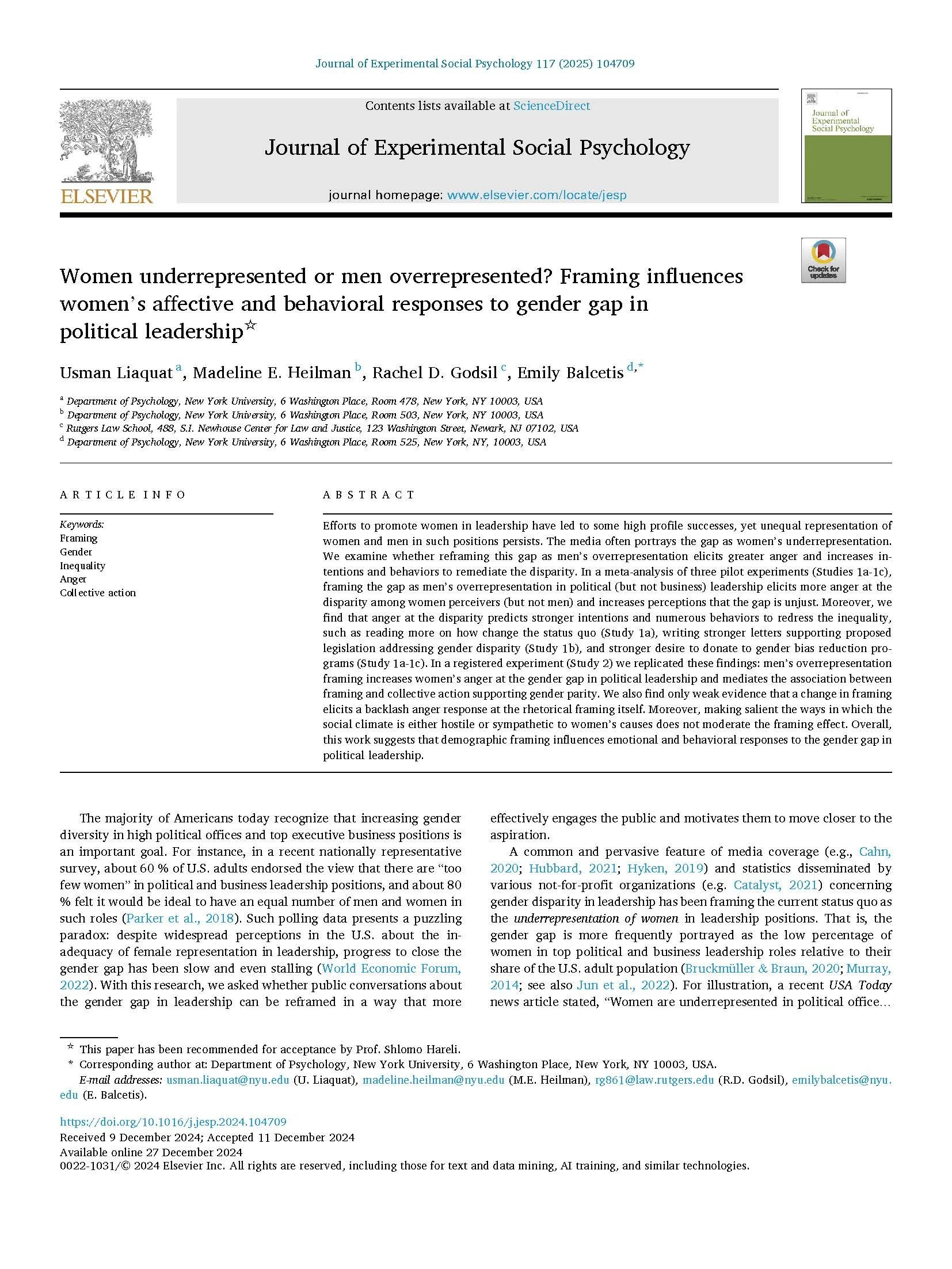
An earlier study showing that a certain form of counter-stereotypical framing of disparities has positive effects.
Frequently Asked Questions
-
Power Framing is a narrative strategy that centers women’s accomplishments and effective exercise of power. Power Framing inspires us to see women in power as natural and achievable.
-
Communications professionals, advocates, organizers, journalists, researchers, storytellers, and anyone who creates content about women's leadership and social change.
-
The underlying social and cognitive science behind narrative framing and concrete techniques to reframe your own messaging.
-
Yes. If you write emails, social media posts, talking points, or have any role in shaping narratives, these techniques will strengthen your work.
-
Not abandon, but overhaul. Power framing refocuses our messaging on the reality and value of women’s power and on our ability to make change. The problem statements are still clear and forceful, but we preface and follow them with solutions.
-
People are feeling overwhelmed, exhausted, hopeless, and even defensive in the current political environment, and many of our common framing approaches feed right into that dynamic. Power framing offers a way to rebuild and sustain engagement, inspire action, and make progress feel possible. There is no time to waste.
-
Yes! Please contact us at webinar@powerframeproject.org to discuss how your organization or network can join one.
-
Email webinar@powerframeproject.org. Feel free to get in touch with team members of the organizations that are collaborating on this project through their own websites.




A project of

In collaboration with